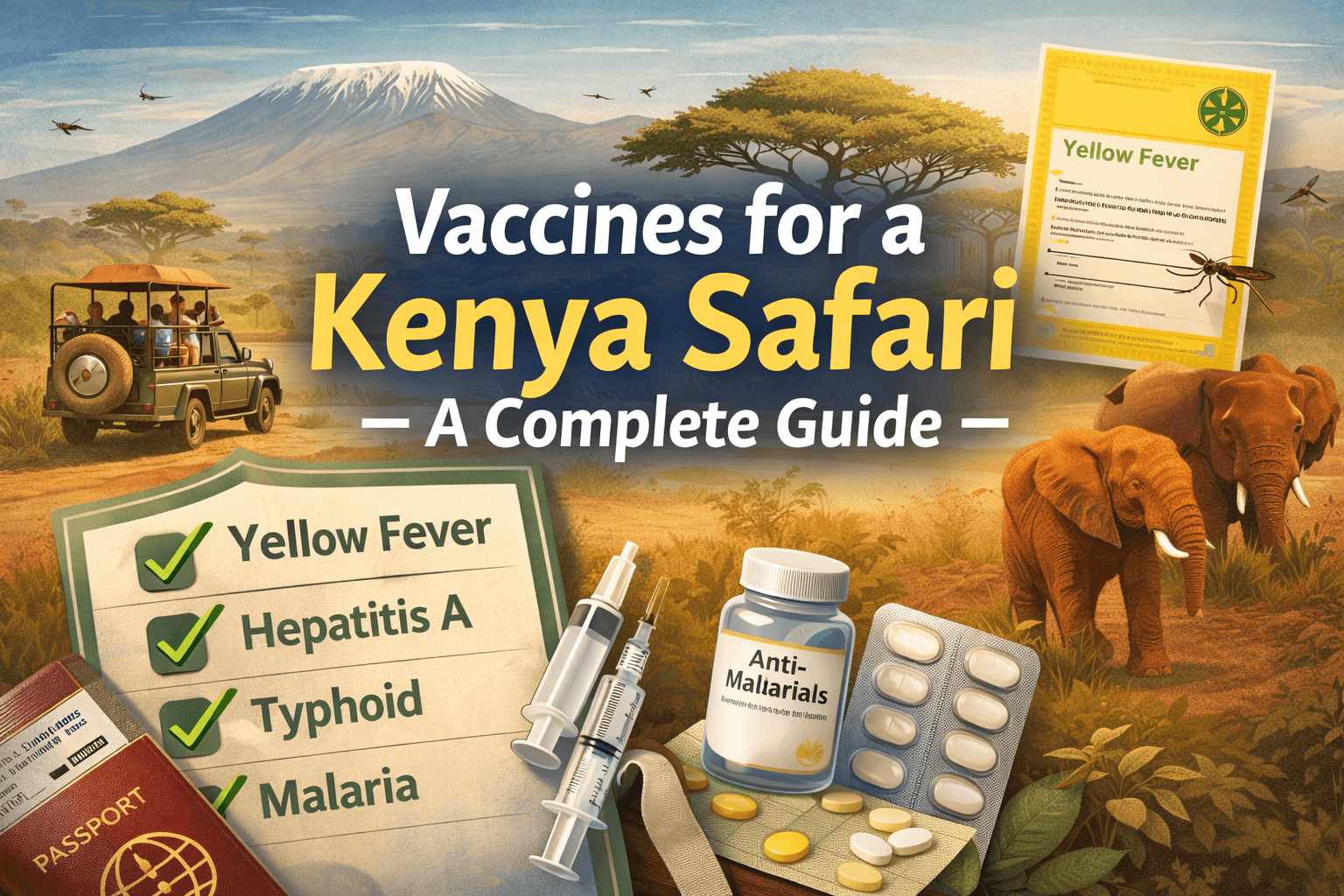
Kenya is one of the world's top safari destinations — the Masai Mara's Great Migration, Amboseli's elephant herds beneath Kilimanjaro, Tsavo's red elephants, and Lake Nakuru's flamingos draw hundreds of thousands of UK visitors every year. But before you book that game drive, it's important to make sure you're properly protected.
Required: Yellow Fever Certificate
Kenya requires a Yellow Fever vaccination certificate if you are arriving from or transiting through a country with risk of Yellow Fever transmission. If you are flying directly from the UK, it is not legally required — but it is still recommended because Yellow Fever is present in parts of Kenya.
At Holborn Clinic, we are an approved Yellow Fever Vaccination Centre. Your certificate is issued on the day and is valid for life. Cost: £79 (includes vaccine + certificate + free travel consultation).
Strongly Recommended Vaccines
Hepatitis A (£59) — Spread through contaminated food and water. Risk exists throughout Kenya, including at safari lodges.
Typhoid (£39) — Also food and water-borne. Recommended for all travellers, especially those eating outside of established hotel restaurants.
Meningitis ACWY (£49) — Kenya falls within the African meningitis belt. Risk is highest during the dry season (January–March).
DTP Booster (£39) — Diphtheria, tetanus, and polio combined. Check when you last had a booster — it's recommended every 10 years.
Consider: Rabies & Hepatitis B
Rabies (£99 per dose, 3-dose course) — If you're staying at tented camps, visiting conservancies, or spending time in rural areas where stray dogs are present. Safari vehicles provide some protection, but evenings at camp do not.
Hepatitis B (£45 per dose, 3-dose course) — Recommended for longer stays or if you may need medical treatment while in Kenya.
Malaria: Essential
Malaria is present throughout Kenya, including all safari areas and the coast. Anti-malarial tablets are essential for all visitors. Options include Malarone (atovaquone/proguanil) and Doxycycline — our pharmacist will recommend the best option for your trip and health profile.
In addition to tablets:
- Use DEET-based repellent (50%+ concentration), reapplied every few hours
- Wear long sleeves and trousers from dusk — this is peak mosquito time
- Sleep under a treated mosquito net (most safari lodges provide these)
- Safari vehicles provide some protection during game drives, but open-sided vehicles at dawn/dusk increase exposure
When to Get Vaccinated
Ideally 6–8 weeks before departure. This allows time for the Rabies course (3 doses over 21–28 days) if needed. For last-minute travellers, Yellow Fever, Hepatitis A, Typhoid, Meningitis ACWY, and DTP can all be given in a single same-day appointment.
Book Your Safari Health Consultation
Not sure what you need? Book a free travel consultation at Holborn Clinic. Bring your itinerary and we'll create a personalised vaccination and medication plan — no obligation, transparent pricing.